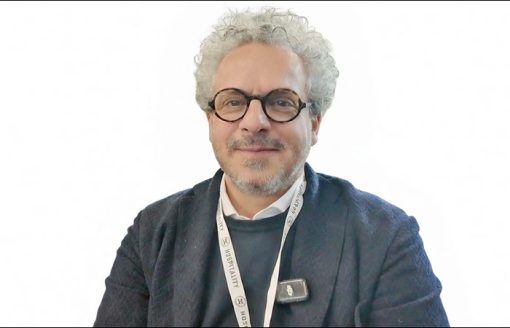
Adria Home celebrated its 20th anniversary in recent weeks. Part of the Trigano Group, the Slovenian company also reached, last March, the important milestone of the 20,000 mobile homes produced. It is therefore an important player on this market, on which Adria Home also offers itself as a “one stop shop”, or as a single point of reference for those who intend to invest in open-air accommodation facilities. Great attention to employees, product quality, sustainability, and after-sales service characterize the Adria Home strategy. Camping Businesstalked about this and more with Marta Kelvišar, since 2014 leading the company in Crnomelj, not far from Novo Mesto.
 Camping Business – Can you tell us something about the history of Adria Home? Why did you choose to create a production plant in this area, surrounded by nature?
Marta Kelvišar – Adria Mobil started producing mobile homes in 2002, at the same time as the birth of Sun Roller, today Adria Home. The interesting thing is that there was a coal mine here 25 years ago, which has been closed and an industrial zone has been built. The Slovenian government, to preserve about 300 jobs and the economy of the area, has therefore provided numerous subsidies to develop this part of the country. In particular, it sold industrial land, such as this one, at a very attractive price. With the acquisition of Sun Roller in 2007, Adria Mobil acquired the company together with eight hectares of land. In recent years we have bought additional land, in anticipation of an expansion of the production area and storage space. In fact, our production plant is not big enough. We plan to double the surface, also enlarging that dedicated to administrative offices.
20 years ago, when this factory was built, we had a capacity of 1,000 units per year. Now we are able to produce up to 2,000 units in two working shifts. To achieve this, we have implemented lean production and technique and digitalization called the “digital twin”. Our employees wear smart watches that instruct them their next work action. We also received an award for the best digital project in Slovenia.
I don’t think there are many other companies in this sector capable of working on double shifts: production is very fragmented, there are countless product variants, customers more often want customized product to be different, and we have the benefit of employing a skilled set of people from various fields. Organizing the work is complicated because it is also important to pursue quality, which is one of the main challenges for everyone. Just think of the hidden defects that manifest themselves after a certain period of time, which can cause enormous damage. Imagine what kind of damage a constant fall of even a small drop can cause. Following the standards designed for classic homes helps. And we do it because it is important not only from a regulatory point of view, but also because these certifications are required in all markets.

Camping Business – The creation of the double shift, as well as an organizational challenge, was also an important change for those who work in the company…
Marta Kelvišar – Our strategy is not based only on sales and market orientation, which are obviously fundamental, but above all on people. In addition, we have implemented “lean production” in the corporate culture. We involve all the employees, to integrate their ideas into the innovation process. In this way we motivate them, they actively participate and we are able to build long term company culture. We tend to hire people for an indefinite period: we use short-term contracts only for onboarding.
We do not consider employees as resources, but as people: they are the most important element for us, people are the company. And every time a good idea emerges from one of our collaborators, we reward them in different manners, with the economic incentive being just one of those. This makes our people engaged and proud to work at Adria Home.
Camping Business – What results have you achieved in economic terms, and how are sales going for the current season?
Marta Kelvišar – Today, we are proud to have achieved record sales and maintained an average annual growth rate of 20% over the past eight years. After increasing the number of markets in which we are present, every year we launch a new family of products, with a very rapid development. It’s very demanding, but it’s also what the market is asking for.
For two years, during the pandemic, we remained at the same production levels. Then the demand exploded, we presented products suitable for every period of the year – such as the Aurora range and the Tiny Homes – and our turnover grew. We thus introduced digitization and then the double shift in production, increasing capacity ut to 2,000 units. And our turnover grew by 55% in one year. Incredible!
This year we will remain more or less on the same numbers, probably with a slight percentage increase. I think it will still be our best year, with Croatia taking the lion’s share. It is also interesting to note that the tour operators are back: we are doing interesting numbers with them. They had disappeared at the time of the pandemic, but now that the market is growing, they have reappeared.

Camping Business – What is the biggest challenge you as a mobile home manufacturer face?
Marta Kelvišar – A huge problem that holds us back in our expansion is that of transport. To move mobile homes, you must resort to exceptional transport, which has a very high cost and continues to grow almost every year. Costs have risen enormously in recent years, but it’s not just a problem of prices: there are few specialized transport companies and above all there is a lack of drivers, many of whom refuse to transport products like ours, which are subject more than others to accidental damage perhaps caused by tree branches.
Added to this is the difficulty of obtaining permits for exceptional transport, a process that takes a very long time. Often thing complicate, especially if you have to cross several countries. And there is nothing you can do…
The challenge now is to push on modular products, lowering transport costs. This also makes it easier to control quality and productivity. Modules up to 4 or 5 meters wide and 12 meters long can be made and then combined side by side or growing in height. The only limit is your imagination.
Camping Business – Do you think that in the future there might be the possibility of having a production plant in another country to better manage this type of problem?
Marta Kelvišar – We are not of this idea. When we bought the Spanish Sun Roller in 2007, it was on the verge of bankruptcy. And the reason for this situation was the corporate culture: it took us some time to figure it out, and in the end we decided to close the Spanish plant and bring all the production here near Novo Mesto, focusing only on our brand.
Camping Business – Speaking of products, how is your offer currently structured?
Marta Kelvišar – Today the most important product family is mobile homes, but we also have modular homes and glamping tents in our offer. Mobile home segment is worth roughly 80% of our turnover, although this share varies from year to year depending on the projects. The range consists of the entry-level SLINE, the intermediate MLINE, the XLINE and the Aurora, also available in a modular version.
The glamping tents are worth about 10% of the turnover and are made on a dedicated line, a short distance from here, which occupies about a thousand square meters. Production is not continuous but concentrated in certain periods of the year.

Camping Business – One of the key words in the sector is sustainability. What are you doing in this area in terms of production, facility management and final product?
Marta Kelvišar – Today we can say that our production is green. We use solar panels to produce electricity and 80 to 90% of our products are made from recyclable materials. Plus, we source from local suppliers. Our products are placed in natural contexts that must be protected and when it is necessary to proceed with their replacement, or you decide to change the project, it is very simple to reuse them in other contexts. And in the end, the way they are lived is also green.
We propose several ways to save energy, including the use of sensors. We love smart solutions, and we also have a specific offer, an “Eco” package. We have also developed a particular technique for making the walls, which are pressed and glued without using materials that are harmful to the environment. It is a project supported by European funds which has already started, and which will soon translate into a concrete offer. All in all, I think Adria Home can be defined as sustainable.

Camping Business – Being part of the Trigano group, are there important synergies between you and Résidences Trigano? Or are you completely independent?
Marta Kelvišar – For a couple of years we have been working on a project that should allow us to produce our top-of-the-range products in France, thus saving considerably on transport costs. More generally, we share best practices, such as that of the Digital Twin: an open project that we would like to implement there as well. Overall, both companies are interested in sharing best practices in production, purchasing, sales, and development processes.

Camping Business – Adria Home claims to follow a “one stop shop” strategy. What does it mean?
Marta Kelvišar – Our clients are increasingly mere investors, who do not know in detail how this business works. They are therefore looking for solutions and with the “one stop shop” strategy, we are ready to provide them, based on our experience, with ideas, projects, products (also customized), periodic maintenance, and life cycle management.
We can design the whole resort if needed, as well as we can even manage it. This means that we are a partner capable of providing a very important part of the investment, both to start the business and to manage it. Obviously, we don’t do everything ourselves, but we make use of our partner structures and professionals, including the Adria Holidays company.
Camping Business – How do you manage after-sales assistance?
Marta Kelvišar – This is a fundamental aspect. We are very focused on the after-sales service, and since we cannot offer it within a few hours in any country, we have a number of partners who are trained by us on all the technical and production aspects of mobile homes. We promptly supply spare parts and for each of our products there is a list of all the components used, such as refrigerators or air conditioning systems. This makes maintenance management easier.
Instead, we are more directly involved in everything related to warranty assistance, because it is important to understand what went wrong and we need to find out why. Once we understand the problem, we transfer this new wealth of knowledge to our partners, who can thus possibly intervene in the most appropriate way.