

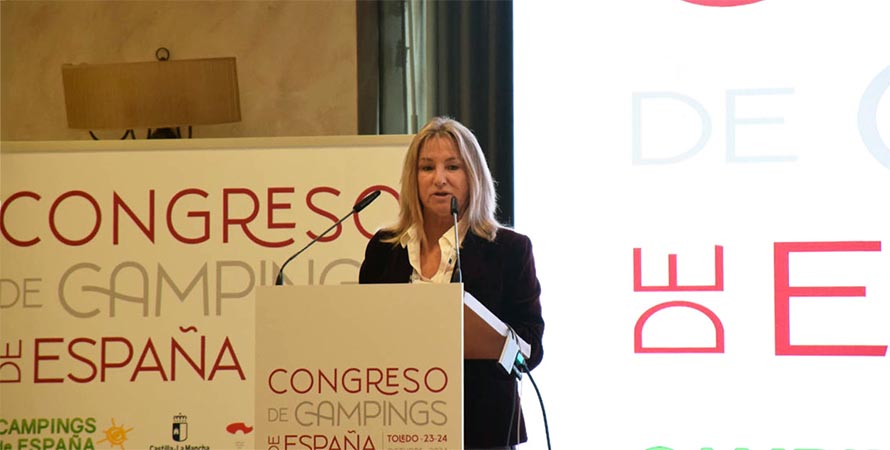

The 34th National Congress of the Spanish Federation of Campsites (FEEC) concluded last week, bringing together over 300 industry professionals in Toledo from across Spain. Numerous key topics were discussed during the congress, including preliminary findings from the study “Economic Impact of Campsites”, conducted by the consulting firm EY. The report provided a detailed view of the economic contribution of campsites for each Autonomous Community, with a focus on the years 2022-2023.
The data show how this tourism segment is experiencing strong growth, representing an increasingly substantial part of Spanish tourism. In 2022, the sector recorded total revenues of €1.32 billion, marking a 26% increase compared to 2019, the pre-pandemic benchmark year. Catalonia emerged as the community with the highest revenue (€610 million), followed by the Valencian Community (€210 million) and Andalusia (€124 million). Of the total revenue, 29% consists of employee costs, which rises to 38% in the case of glamping. These figures demonstrate that camping is an increasingly significant economic segment.
The FEEC report also highlighted an interesting point regarding campers’ spending habits. Around 35% of average spending goes toward accommodation – including pitches, bungalows, and glamping areas – while the remaining 65% supports local sectors such as restaurants, shops, and nearby experiences. This spending behavior creates a multiplier effect on other economic activities, such as dining, cultural activities, and entertainment, particularly in rural areas where campsites serve as an essential resource for local commerce.
In the opening photo Ana Beriain, FEEC president (thanks to Camping Profesional)


2025: a golden year for camping in Europe – online searches +11% and bookings +30%, according to ACSI