



Tourism in the European Union reached unprecedented heights in 2024, with an estimated 2.99 billion nights spent at tourist accommodation facilities. This marked an increase of 53.4 million nights, or 2%, compared to the previous year, according to early estimates released by Eurostat.
The surge in tourism was primarily fueled by a significant rise in nights spent by international guests, which increased by 58.7 million. In contrast, nights spent by domestic guests saw a modest decline of 5.3 million. The distribution of tourism nights in 2024 was relatively balanced, with international visitors accounting for 48% and domestic travelers making up 52%.

Hotels and similar accommodations continued to dominate the sector, accounting for 1.9 billion nights or 63% of the total. Holiday dwellings and other short-stay accommodations followed with 711 million nights (24%), while campsites hosted 396 million nights (13%).
Growth across the EU
Most EU countries experienced an increase in tourism activity compared to 2023. Luxembourg led the pack with a remarkable 22% rise in nights spent at tourist accommodations, followed by Malta (+13%) and Latvia (+7%). However, slight decreases were noted in France and Belgium (-1% each), while figures remained stable in Sweden, Finland, and Italy.
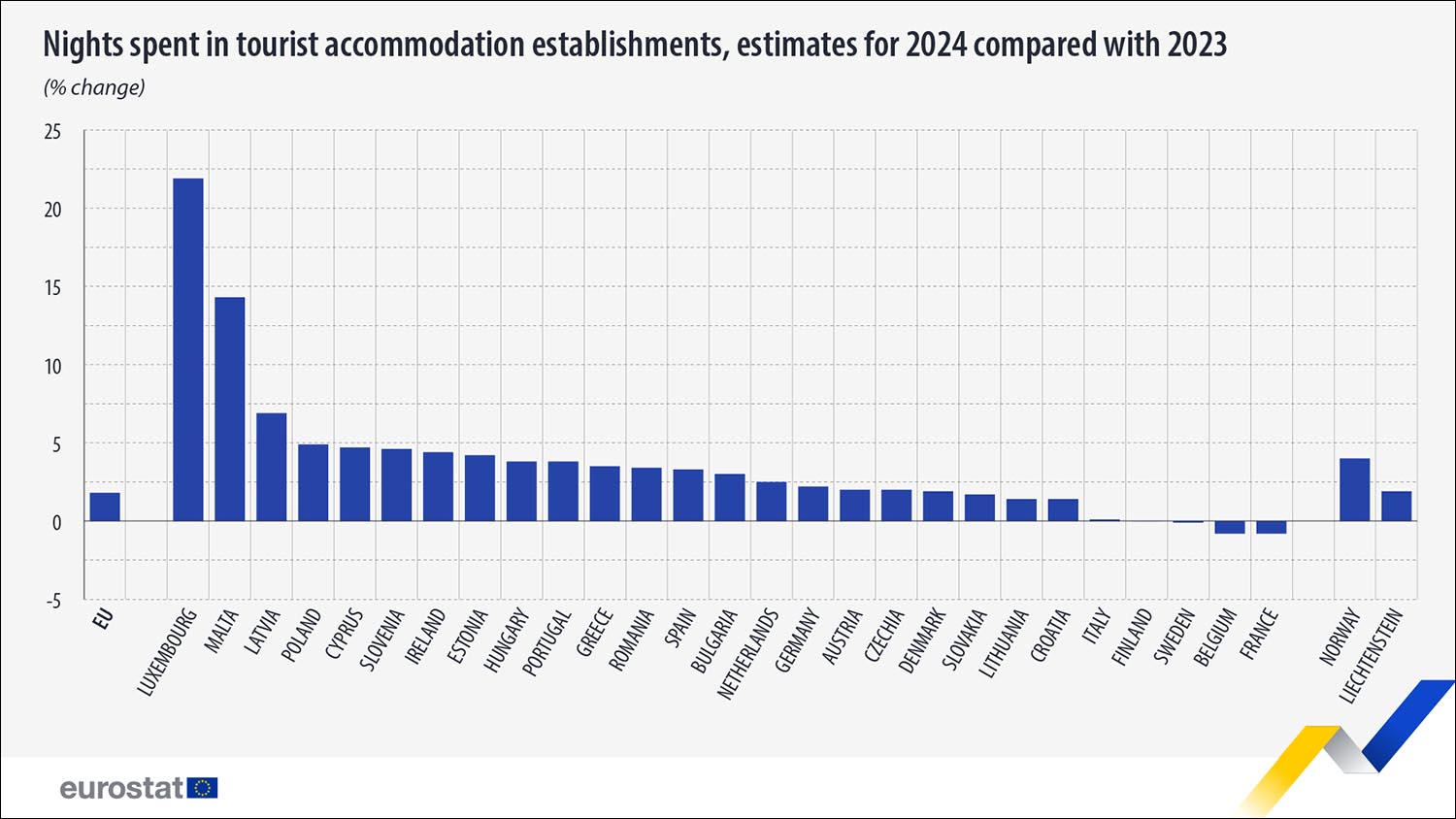
These insights form part of a broader dataset provided by Eurostat, which offers a comprehensive view of tourism trends across the EU. Tourism’s upward trajectory highlights the resilience and appeal of the EU as a premier global destination, with a dynamic balance between international and domestic travelers shaping the region’s hospitality landscape.
Photo by Chait Goli



Adria Home reaches the important milestone of 20,000 mobile homes produced