

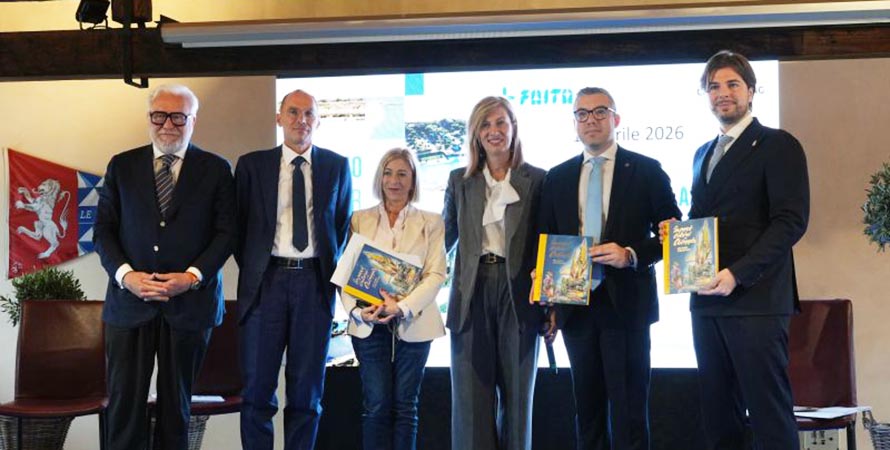

In recent weeks, FAITA Federcamping has organised a closely sequenced series of local initiatives and industry forums, including the States General in Chioggia, the FAITA Lazio conference and the recent FAITA Marche Open Air Conference 2026. This activity has gone well beyond institutional representation, translating into data production, operational guidance and a clear ability to interpret ongoing transformations within the sector.
The States General of open-air tourism held in Chioggia on 15 April, focusing on the Po Delta and the Upper Adriatic area, highlighted a positive trend in bookings for the 2026 season. Average occupancy has increased (from 49.5% to 50.2%), with particularly dynamic performance in Chioggia-Sottomarina, where growth is approaching 10 percentage points, driven primarily by domestic demand.
Beyond the data, the event offered a broader reading of the value chain: the central role of seasonal employment, albeit with elements of continuity; increasing attention to welfare and staff accommodation; and a progressively more structured training system, supported by ITS institutes. Equally relevant were the themes of sustainability – with ESG reporting as a lever for access to finance – and the impact of climate change, which is driving new investments in coastal protection and the resilience of tourism facilities. In the background, the integration of artificial intelligence into travel planning processes is already being adopted by a significant share of users.
Just hours later, on 16 April, the focus shifted to Central Italy with the FAITA Lazio conference at Camping Village Roma Capitol, titled “Lazio Open Air: development, innovation and new perspectives between an evolving market and regulatory reforms”. Here, discussions centred on the evolution of demand and the consequent need to reshape supply.
What clearly emerged is a transition from traditional tourism towards a more demanding market, oriented towards comfort, sustainability, digitalisation and experience. The so-called “hotel transition” – with new customers coming from the hotel sector – is raising quality standards and accelerating the adoption of technological solutions, from home automation to digital services for the guest experience.
At the same time, the regulatory framework remains a key factor: on the one hand an enabler, on the other still burdened by bureaucratic complexity that slows down development, as seen in the case of new installation procedures for mobile homes. Completing this picture of intense activity is the recent FAITA Marche Open Air Conference 2026, a further sign of a widespread and well-coordinated presence across the territory.
Taken together, these initiatives by FAITA Federcamping outline a clear strategy: to maintain a strong territorial presence, produce valuable content for operators and support the sector through a complex transition phase shaped by evolving demand, regulatory developments and environmental pressures.
Photo: States General in Chioggia, courtesy of FAITA Federcamping on LinkedIn

The new PiNCAMPUS arrives – two weeks of training focused on data and environmental topics