

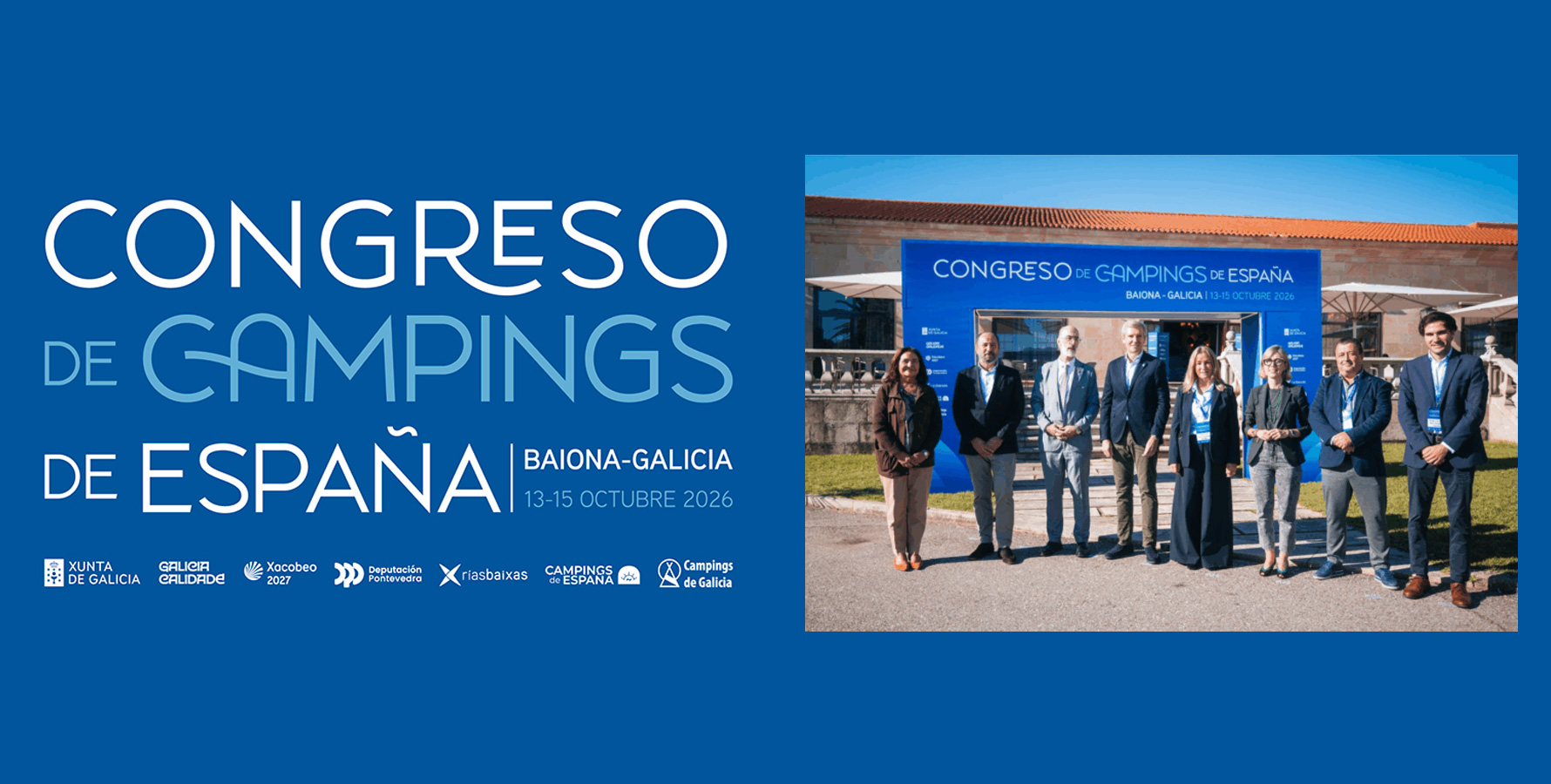


The camping sector in Spain continues to perform well, with record figures for turnover, employment and tourist spending. This is reflected in the market trends report compiled by EY, presented on Wednesday 14 October during the Professional Conference of the National Camping Congress, held at the Parador de Baiona (Pontevedra).
The event brought together campsite owners and managers, institutional representatives, economic experts and suppliers from across Spain to analyse the sector’s situation and its main challenges in terms of financing, digitalisation, legal certainty and sustainability.
The opening ceremony was presided over by the President of the Xunta de Galicia, Alfonso Rueda, accompanied by the Mayor of Baiona, Jesús Vázquez Almuiña; the Director of the Galician Tourism Agency, José Manuel Merelles; and the Director of Tourism for the Pontevedra Provincial Council, Romina Fernández.
During his speech, Rueda highlighted the modernisation of campsites, the involvement of younger generations in their management and the commitment to digitalisation. For his part, the Mayor of Baiona emphasised the contribution of campsites to the diversification of the tourism offering and the reduction of seasonality.
The camping sector is projected to generate 1,745 million euros in 2025
The report presented by EY estimates the turnover of the camping sector in Spain at €1,745 million in 2025, 6.9 per cent more than in 2024, with an average turnover of 1.56 million euros per site. Another key finding is the increase in average spending per camper, which reached 167 euros in 2025, representing a 49 per cent increase compared with 2019 – double the rate of growth of the Consumer Price Index (CPI) over that period.
Demand also continues to show a positive trend. Up to May 2026, 12.7 million overnight stays were recorded, whilst year-on-year growth in the number of campers stood at 9.7 per cent, compared with the historical average of 6.4 per cent. In terms of employment, the average workforce per site reached 14 direct employees, 2.3 per cent more than the previous year.
Ana Beriain, President of the Spanish Federation of Campsites (FEEC), has pointed out that these figures reflect the transformation of camping into an increasingly professionalised and profitable activity, capable of generating economic value in destinations.
The report also highlights the sector’s impact on its local environment. Two-thirds of tourist spending associated with campsites goes towards catering, activities and local shops, whilst 84 per cent of travellers purchase local products or souvenirs during their stay.
Funding and legal certainty: challenges for campsite operators
As well as analysing the market’s economic performance, the National Campsite Congress addressed issues relating to business management and investment.
EY delivered a session on how to prepare a campsite to access funding or undertake a potential sale or acquisition, paying particular attention to the main risks that may arise during these processes. Legal certainty was another key topic. Almudena de la Fuente, a lawyer with the Spanish Campsite Federation, analysed various planning and regulatory issues affecting campsites, ranging from licences for the installation of mobile homes to exemption from property tax (IBI).
Digitalisation and artificial intelligence in campsite management
Technology featured prominently at the professional conference, with various sessions focusing on process automation and new management tools. Lares Gestión explored the possibilities of automation within campsites, whilst a demonstration of cloud-based management systems provided an insight into technological solutions applicable to the day-to-day running of campsites.
Artificial intelligence was also a key theme in the presentation “Delegate to AI every day“, delivered by Álvaro García, President of the Andalusian Federation of Campsites, which focused on incorporating these tools into day-to-day management tasks.
In the economic and commercial sphere, Diego Hernández, Director of Tourism at CaixaBank Hotels & Tourism, analysed the outlook for the tourism sector, whilst Septeo presented its online booking barometer, featuring indicators on average spend and length of stay by destination. For its part, Carrefour has announced a new agreement to facilitate the opening of shops and supermarkets within campsites.
Seasonal adjustment and sustainability: the challenges facing “Green Spain”
The programme also featured a round-table discussion entitled “Green Spain: Tourism Success and Future Challenges“, with representatives from campsites in Galicia, Asturias, Cantabria and the Basque Country. During the debate, some of the main challenges facing these destinations were addressed, such as seasonality, adaptation to climate change, sustainability, pressure from tourism and the growth of motorhome tourism. The manager of the Spanish Campsite Federation, Sergio Chocarro, emphasised the need to tackle these challenges from a joint perspective and to continue providing tools and information to business owners to promote orderly growth.
The Professional Session of the 2026 National Campsite Congress highlighted the economic growth of the camping sector in Spain and the importance of continuing to make progress in professionalisation, technological innovation and legal certainty to tackle the coming years.
This article was originally published on Camping Profesional

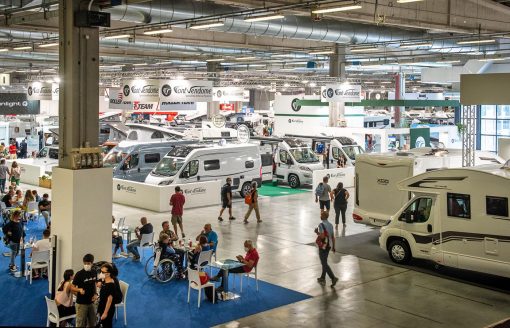
At the Salone del Camper in Parma there was talk of motorhome rest areas as a development of local tourism