



The approach to the Salone del Camper 2023, which will be held in Parma from 9 to 17 September, began with an interesting webinar. Organized by the Salone del Camper Lab, it is entitled “Digital and Metaverse. Opportunities and Tools for Open-Air Tourism“. Gloria Oppici (Brand Manager of the Salone del Camper), Ludovica Sanpaolesi (Director of APC), Alberto Granzotto (President of FAITA-FederCamping), Gianluca Tomellini (President of AIASC), Giorgio Proglio (Founder of Tabui App), Matteo Botti (Digital Strategist AICOD), Gualtiero Carraro (CEO of Carraro Lab) and Edoardo Colombo (Advisor BTM) confronted each other.
Journalist Sabrina Talarico moderated the event, highlighting the importance of the digital world and emphasizing that the metaverse should not be seen as a replacement for travel, but as a support that can be given to the traveler at every stage of his journey, from initial approach to the resulting memories.
A tourism salon

Gloria Oppici‘s speech highlighted the fact that visitors to the Salone are not just motorhome owners, but experiential tourists, who go to visit an event capable of bringing together hundreds of vehicles offered by the entire European industry in one place.
“Not everyone who participates already owns a motorhome: many are novices, families who practice sports in nature, who have animals with them, who find the answer to their needs in a holiday in freedom,” she said. “It is certainly an automotive show, but above all for tourism. In terms of numbers, it gives extraordinary satisfaction to all those who work in the sector, both administrations and operators and entrepreneurs involved in hospitality. It is a public that leaves a lot of money in the area, not only for food, but also for the purchase of typical products. Ours is an extraordinary country, very popular with foreigners, and we all move more often. We want to go beyond word of mouth and for this reason we want to talk about digital and metaverse”.
According to Oppici, by exploiting the potential of digital and the metaverse it is possible to get to know the destination better before leaving and then to decline the travel experience in different ways. Everyone can build the holiday that he dreams and wants, outlining the itineraries with greater precision. This is why it is necessary to equip our country with suitable landing places for the marvel of this type of tourism.
8 reasons to digitize

Ludovica Sanpaolesi, Director of APC – Caravan and Camper Manufacturers Association, offered 8 good reasons to think concretely about the digitization of the sector.
- The first reason is the great European potential, with a fleet in circulation of over 6,151,000 vehicles, of which approximately 3.5 million caravans and 2.64 million motorhomes, which are growing rapidly. These numbers involve, as estimated, around 20 million European tourists.
- Campers spend. A German research institute has been commissioned by the ECF to study land spending. The result is that the tourist expenditure of itinerant tourists in Europe is valued at €23.37 billion. And this amount completely excludes the cost of purchasing vehicles.
- The third is a more cultural reason. The notorhome is not just a vehicle intended for holidays, but for leisure time in general. It’s a somewhat liquid concept of vacation. The motorhome, better than other tools, can help interpret this new trend.
- Seasonal adjustment: tourists in motorhomes travel all year round, even in the low and very low seasons and are therefore an important opportunity for all businesses in the area. And in this context, digital is important: by exploiting it, a rest area can remain open all year round, keeping management costs as low as possible. Digitization is not only used to attract the public, but also to manage accommodation facilities.
- The public of motorhome owners is transversal, but today the average age is decreasing and this favors the use of digital methods of communication. It doesn’t just happen in Italy, but throughout Europe.
- The quality of motorhome tourism, which is slow tourism, where people love to explore the territories and take advantage of local food and wine products. Digitization and metaverse can help create a storytelling that can make even the smallest places, such as villages, or those with a lesser tourist tradition, protagonists.
- Italy has great potential. In search engines, the query “Italy” is almost always in first place, but when you do the end-of-season calculations, it turns out that we are in 5th place. This means that the desire for Italy is really great, and we can use digital and metaverse to improve this position.
- Perhaps the most important reason. Itinerant tourism is a “megatrend”: in 2017 in Europe 111,000 new motorhomes were registered, in 2021 181,000 – an increase of over 63% in five years. This means that all investments made in digitization and the metaverse will be repaid over time by a rapidly growing sector.
The Receptivity has Already Chosen the New Tools

Testifying how the open-air accommodation sector is focusing on digitization was Alberto Granzotto, President of FAITA-FederCamping. “The world of outdoor tourism has long since developed very important digital products and today it is opening up to everything that technology offers – not only the metaverse, but also Artificial Intelligence,” he said.
Granzotto also gave an overview of the sector: Italian open-air accommodation facilities represent only 1% of the total, but 25% of beds, over 10% of arrivals and about 20% of presences, for €3 billion direct turnover and €2 billion related ones. More than 250,000 pitches are destined for itinerant tourism on a total area of over 72 million square meters.
“As an association we have promoted an important digital observatory that measures the flow of bookings in real time,” he explained. “The management systems are connected anonymously to aggregate this data. We can thus see the trends divided by segment in real time, starting with motorhomes, caravans, and mobile homes. We have also developed an important project with CISET to manage the multimedia component, allowing operators to create platforms capable of collecting all digital contents. This will make it possible to manage an increasing number of data, but above all to be updated in real time on all channels. Finally, we are also collaborating with ENIT’s Tourism Digital Lab”.
A Wave to Ride

Gianluca Tomellini, President of AIASC, was called to talk about rest areas. “Digitalization has become an established business model for our companies and an increasingly essential tool for users,” he said. “The offer has generated the demand and we need to think more and more digitally, not only for access control, but for all aspects of accommodation facilities”.
He explained it well with a practical example, speaking of savings linked to the reduction of fixed costs as a result of the reduction of personnel in attendance. Three people cost €90,000 per year regardless of arrivals and size. With a digital system it is possible to operate remotely, assisting the customer even from afar. The manager also manages to reduce maintenance costs because the technician intervenes only when needed, thanks to home automation that signals the presence of any problems. Then there is the potential elimination of vandalism thanks to video surveillance and a greener approach by managing lighting better.
And it’s not just about savings, but also about improvements in landscape integration and leaving the entrepreneur more time to think about business development. “Digitalization generates the economy, GDP, development, and entrepreneurial creativity,” concluded Tomellini. “The pandemic has been an accelerator, and to think that the world is now slowing down or stopping is inconceivable. Artificial Intelligence will bring great innovations and therefore the digital wave must absolutely be ridden”.
The Importance of 7 Minutes
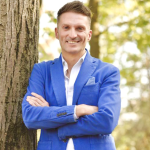
Giorgio Broglio, Founder of Tabui App, explained how the solution developed by his company allows you to easily find out what to see or do around where you are. The digital approach makes it possible to find the necessary information in a simple way and he underlined how functions are also being integrated that until now we were not used to thinking about, such as for example the one that allows you to know where to confer differentiated waste. The success of the app is demonstrated by the average time spent by the user: a good seven minutes.

Matteo Botti, Digital Strategist of the AICOD communication agency, underlined how important this value is. “In a hyper-fractionated world, we have to try to keep people to the stories we tell,” he said. “We have to create narratives that are not experienced as annoyances. Only in this way will we then obtain time, and therefore conversion. Don’t be intimidated by these new technologies. The data and analyzes talking about profiled people, whose habits have been entered into the data structures. When a company wants to sell something, it analyzes them”.
Google Street View as an Example of a Metaverse

After many nods to digital, Gualtiero Carraro, CEO of Carraro Lab, entrepreneur and researcher who boasts 11 international awards and 150 multimedia works, has come to speak more directly of the metaverse, defined as the immersive evolution of the Internet. “It’s a promise that the Internet has made since its inception,” he explains, “because site means place, not page, navigating means moving, not clicking“.
As mentioned at the beginning, the metaverse can be applied to all phases of the journey: before, during and after. You have to think of it not just as a virtual experience, but a hybrid one: like virtual or augmented reality. And you don’t necessarily need specific viewers, because the contents can be enjoyed in different ways. For example, scanning the passage by drones and making it “browsable” in a way similar to Google Street View, which is today the largest example of a metaverse online. Thanks to the metaverse, destinations can become even more accessible: people with disabilities or limitations can get to know places that they otherwise would not be able to visit.

Edoardo Colombo, BTM Advisor and author of the book Turismo Mega Trend, closed the webinar citing digital payments, sharing, Artificial Intelligence and 5G as very interesting elements for tourism. That it is evolving and that it cannot forget digital nomads and smart workers.
The full recording (in Italian) of the webinar “Digital and Metaverse. Opportunities and Tools for Open-Air Tourism” is still available online on the Salone del Camper website.


Easytex: here’s how to protect yourself from bedbug invasion