



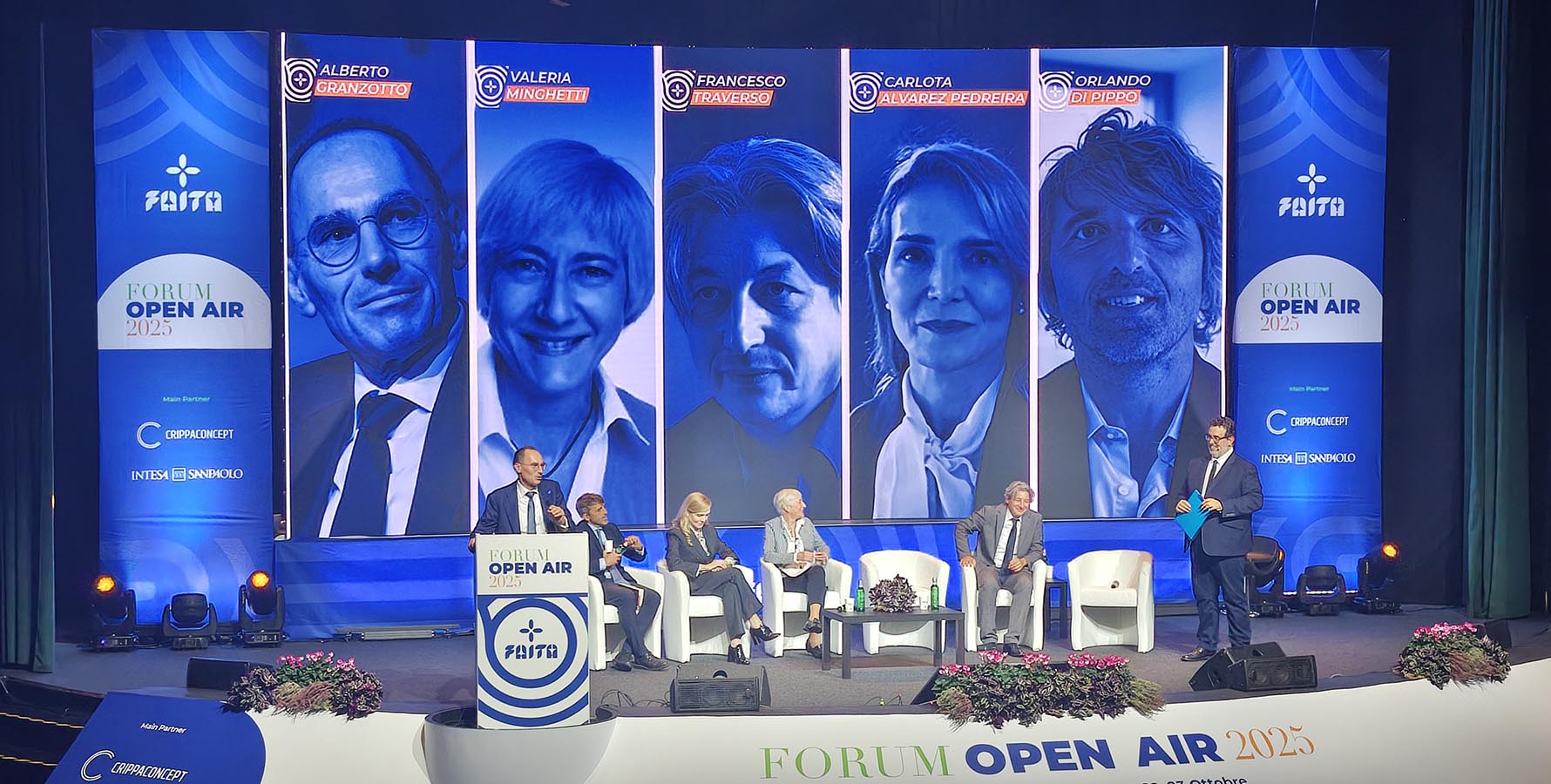
The second day of the Forum Open Air 2025, organised by FAITA Federcamping in Rome, brought together voices, experiences and visions that portray a sector increasingly aware of its role within Italy’s tourism economy. The Italian open-air hospitality sector continues to demonstrate its strength in 2025, consolidating the record results achieved in recent years. “The momentum is turning into structural growth. After a buoyant 2024, open-air tourism remains the second most popular form of accommodation among travellers, after hotels,” commented Alberto Granzotto, President of FAITA Federcamping.
The sector, worth around €8 billion in annual turnover, recorded 11 million arrivals and almost 73 million overnight stays in 2024 – figures that have held steady this year, with a slight decline in the German market (still the leading source of visitors) partly offset by an increase in Italian and Austrian guests. According to the initial data compiled by FAITA Federcamping, the 2025 season – spanning from late March to the end of September – shows a 1.4% increase in average occupancy compared with 2024, peaking at 86% during the June holidays of German tourists and 92% in the mid-August period.
After the opening session dedicated to training and the launch of the FAITA Academy, the Forum Open Air focused on four key themes: the culture of data, the enhancement of destinations, the centrality of the open-air offer, and the development of systemic strategies for the enterprises of the future. The day was opened by Granzotto, who reminded the audience that knowledge and data sharing are now the foundations for sustainable growth: “Only by starting from the numbers can we truly understand who we are, compare ourselves, and build our future”.
Knowing to grow: the value of data for open-air enterprises
From this premise, Valeria Minghetti, Head of Research at the CISET – International Centre for Studies on the Economics of Tourism, presented the findings of the survey on the 2025 summer season. The results show a generally positive trend, though with regional variations: steady domestic demand, a slight decline in international arrivals, and average revenues broadly in line with 2024. “You cannot manage what you cannot measure,” Minghetti recalled, “and without data, you are just another person with an opinion. Data help businesses make decisions based on reality, not perception”.
The research also highlighted the importance of a widespread data culture, capable of overcoming fragmented information and a lack of analytical skills. In this context, technological integration and cooperation between businesses and destinations have become essential tools for interpreting trends and planning shared strategies.
In line with this perspective, Francesco Traverso, CEO and Co-founder of HBenchmark, explained how hospitality-focused Business Intelligence platforms now enable operators to monitor occupancy rates, average revenues and market trends in real time. “The 2025 season,” he said, “was highly dynamic: May showed a decline, June a strong rebound, July was more challenging due to the weather, while September proved surprisingly positive. This reflects a more flexible, adaptive tourism model that demands precise tools to be properly understood”.
According to HBenchmark data, the sector recorded a 7% increase in average profitability per available unit, confirming the economic strength of the open-air segment even in uncertain conditions. “The challenge now,” Traverso added, “is to move from static data to dynamic information — building predictive models supported by artificial intelligence to help entrepreneurs make quicker and more targeted decisions.”
The role of AI was also at the centre of Carlota Alvarez Pedreira’s speech, Managing Director of Oracle Italy, who emphasised that artificial intelligence will never replace human beings but rather amplify their decision-making abilities: “AI can take care of repetitive tasks, allowing people to focus on what truly matters – the relationship with the guest.”
Territories, experiences and communities: the destination as a living system
The second panel shifted the focus from data to territory, exploring the synergies between businesses, culture and local communities. The central theme was clear: the open-air enterprise as a territorial hub capable of generating widespread value.
Among the most moving moments of the day was the remembrance of Alberto Corti, a long-standing reference figure at Confcommercio and Confturismo, who passed away recently. President Granzotto recalled his vision and generosity, linking his legacy to a project particularly dear to him: Sentinelle del Mare (Sentinels of the Sea).
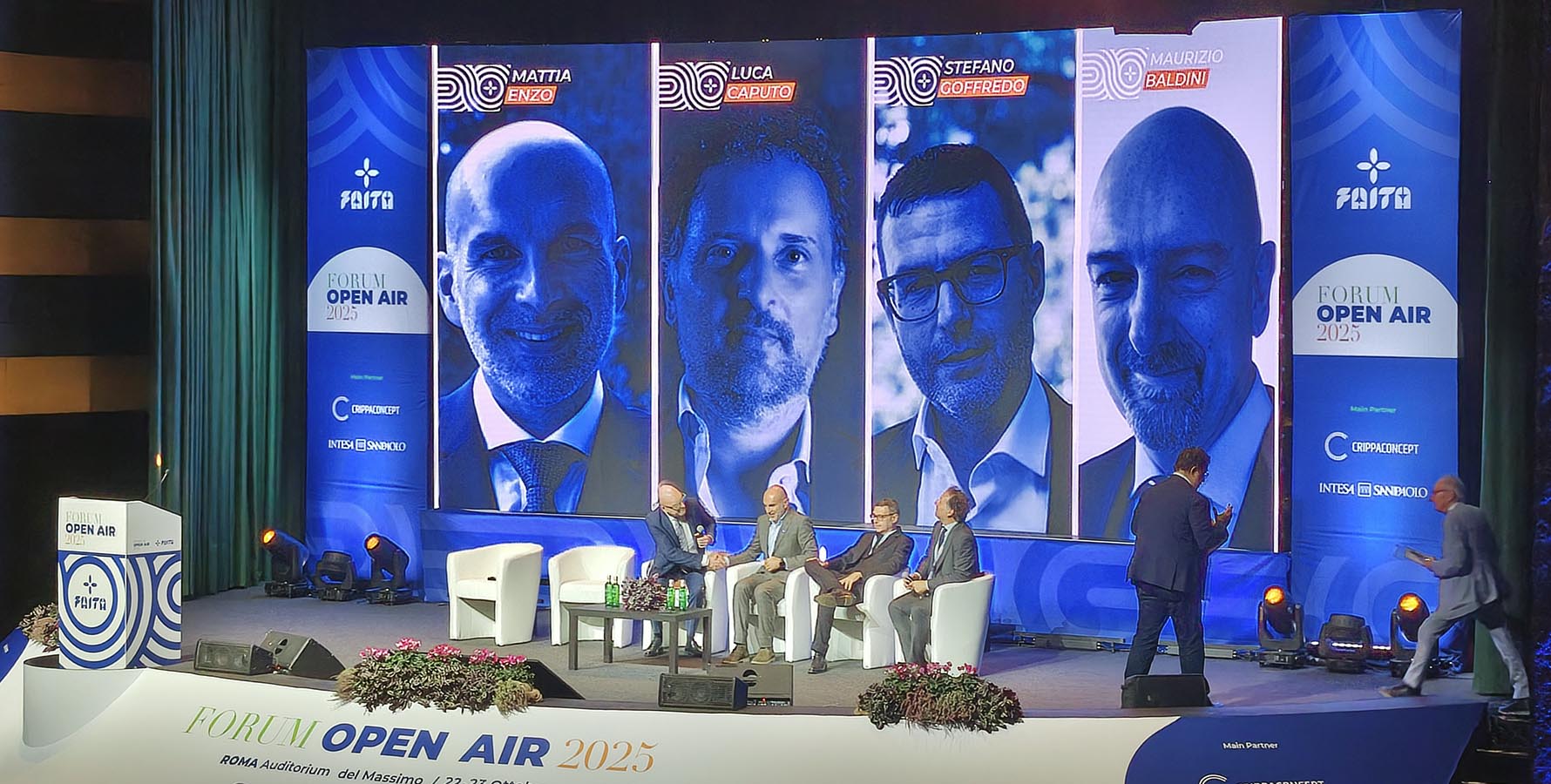
Presented by Stefano Goffredo from the University of Bologna, the project involves tourists and citizens in the collection of marine biodiversity data through citizen science. “It’s an intelligent way,” Goffredo explained, “to bring tourism and science together, raising environmental awareness and respect for the seas that host our holidays”.
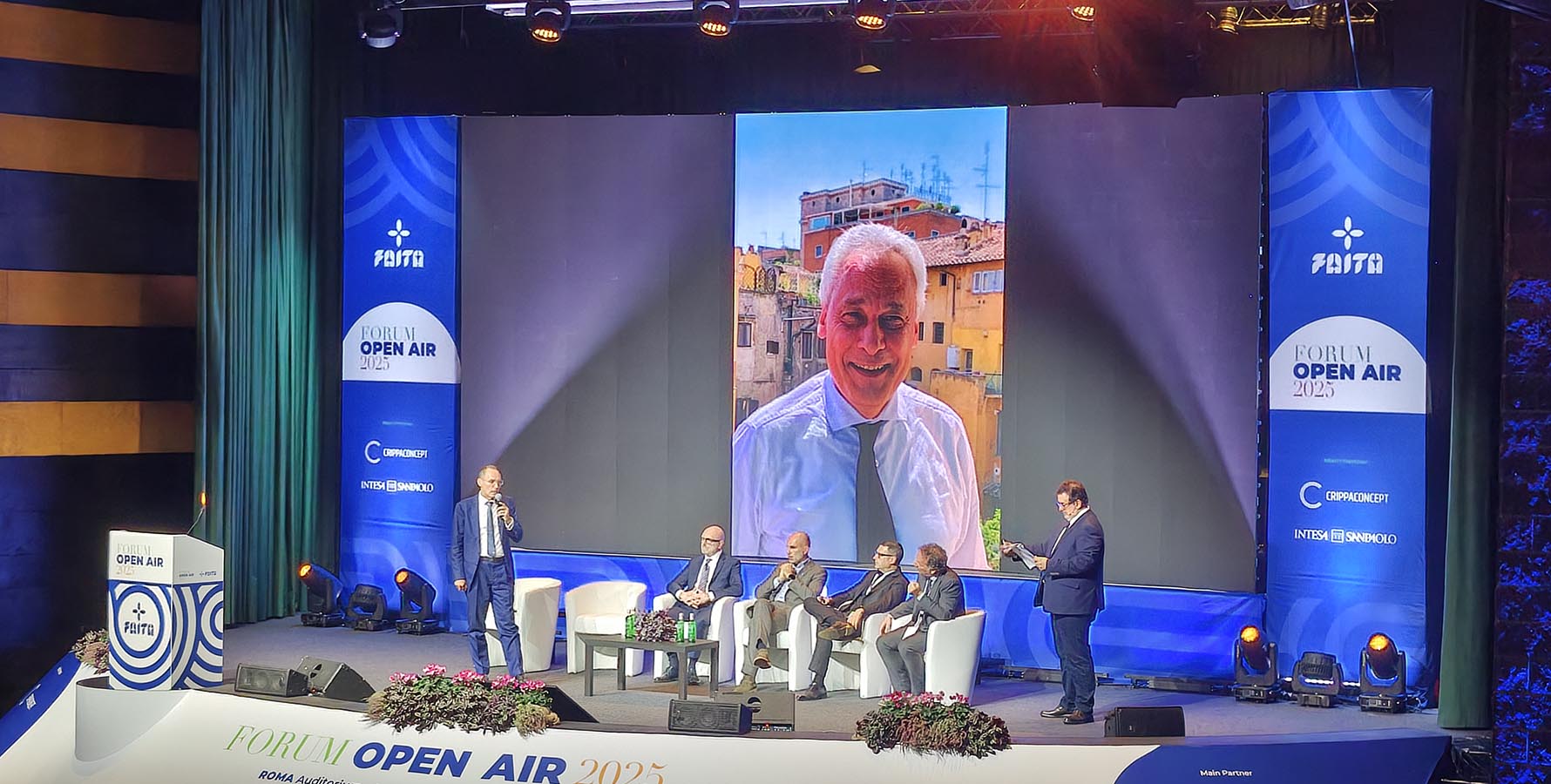
The panel also showcased various destination management initiatives: Flavia Coccia, Vice-President of Assidema, underlined the importance of structured organisations and professional skills within DMOs; Mattia Enzo, President of the Cavallino Treporti Tourist Park, described the transformation of his area from a seaside resort into a laboratory of sustainability and innovation; while Paolo Artelio, President of the Verona Garda Foundation, illustrated how data analysis and public–private cooperation are redefining tourism governance across the region.
A recurring theme was accessibility. In a passionate address, Roberto Vitali (Village for All) urged the sector to move beyond a regulatory mindset towards a more human, inclusive approach. “Let’s not talk about disability but about accessibility needs,” he said. “Improving the experience for people with specific requirements means improving quality for everyone. Accessibility is a competitive advantage, not an obligation”.
The centrality of the open-air offer: integrated hospitality between product and service
While the first part of the Forum focused on numbers and knowledge, the next session brought back to the centre what gives meaning to every open-air enterprise: people and the experience of hospitality. As speakers pointed out, outdoor tourism is changing profoundly. Today’s guests are more conscious and demanding, yet increasingly eager for genuine emotions: they seek contact with nature without sacrificing comfort; they crave freedom but also attention, care and human connection.
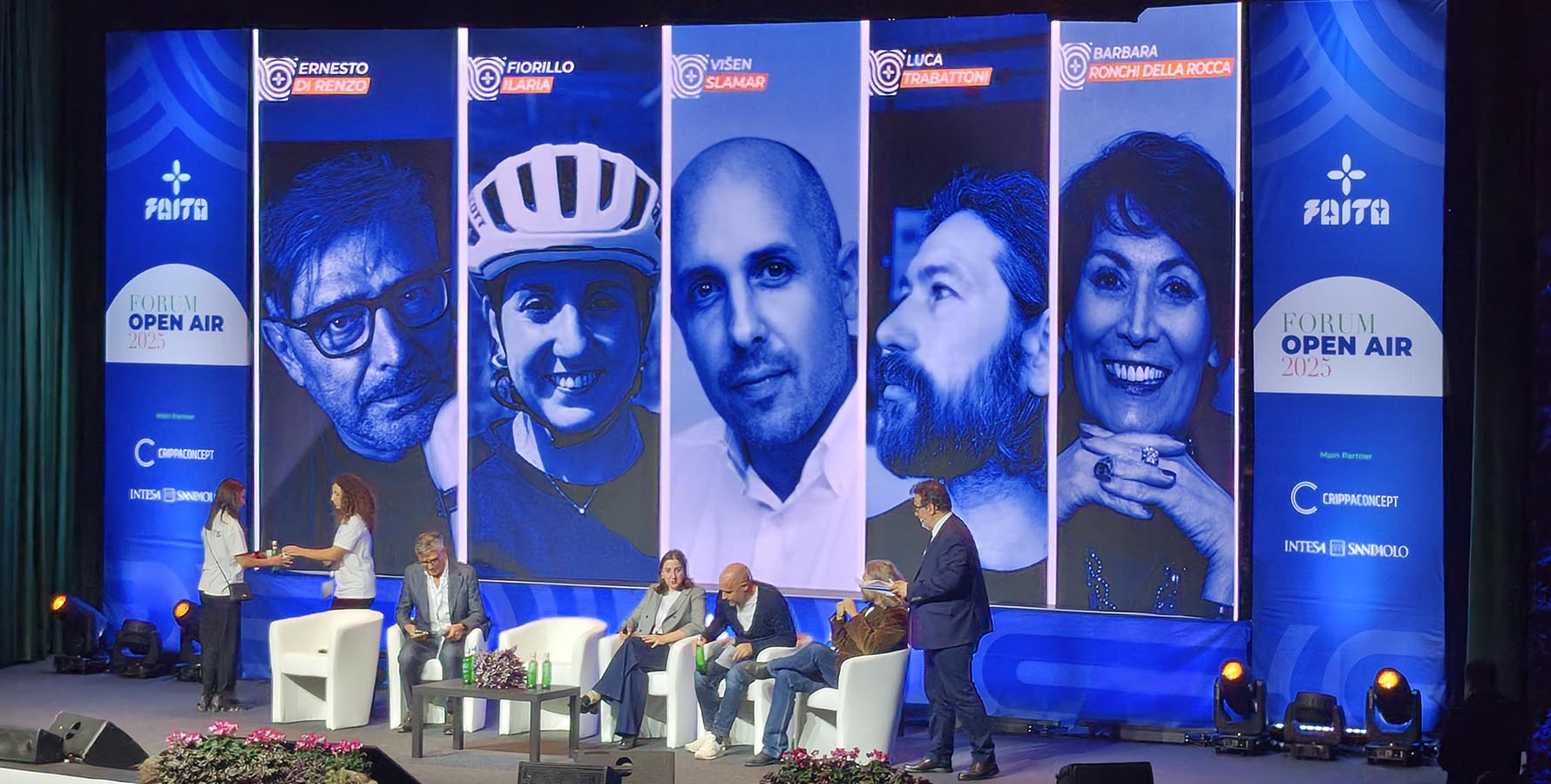
Ernesto Di Renzo, anthropologist at the University of Rome Tor Vergata, opened the debate with a cultural reading of modern travel: “A holiday has become a ritual of regeneration – a moment in which individuals search for authenticity, meaning and identity. Hospitality, in this sense, is a form of culture, not merely a service”.
Following this reflection, several complementary perspectives emerged. Ilaria Fiorillo, cycling tourism expert and influencer, described how cycle tourism acts as a natural bridge between sustainability and hospitality: “Cyclists need facilities that understand their needs – safe routes, secure storage, refreshment points and an approach to welcome that matches a slower, more human pace”.
Višen Slamar from Tissa & Partners introduced an architectural perspective, speaking of a “new grammar of open-air hospitality” – a design language blending natural materials, function and emotion to create spaces that communicate harmony. “Beyond glamping,” he explained, “lies a dimension where architecture becomes experience: the campsite is no longer just a place to sleep, but a landscape to inhabit”.
The evolution of mobile homes fits perfectly into this vision. Luca Trabattoni, Associate Professor at the University of Technology in Opole (Poland), highlighted how academic and industrial research is converging towards high-efficiency, modular and sustainable housing models: “New solutions focus on eco-friendly materials, technological integration and spatial flexibility. The goal is to create environments that offer comfort but also identity and quality of living”-
The panel concluded with Barbara Ronchi della Rocca, etiquette expert and former Master of Ceremonies at the Quirinale, who brought the discussion back to a fundamental element: the human factor. “Hospitality cannot be taught from a manual,” she reminded the audience. “It stems from respect, sensitivity and the ability to put oneself in someone else’s shoes. Even the most sophisticated technology can never replace a smile, a glance or a kind gesture”.
Her words summed up the spirit of the session perfectly: in the open-air tourism of the future, the most authentic form of innovation will be the one capable of holding together product and relationship, comfort and nature, efficiency and humanity.
From tools to strategy: systemic visions for the enterprises of the future
The final part of the day drew together the threads running through all the sessions: data, people and tools as the three levers of a single transformation. During the panel “From Tools to Strategy”, representatives from Oracle, Mashfrog, Yato, NP Technology and Intesa Sanpaolo outlined the roadmap for open-air enterprises in the coming years. The integration of management software, data-lake platforms, cryptocurrency, digital finance and artificial intelligence solutions is set to become the operational backbone of hospitality businesses – yet always balanced with human and environmental considerations.
Paola Rusconi of Intesa Sanpaolo emphasised the bank’s commitment to supporting tourism SMEs in pursuing green and digital investments, while Federica Vazzola and Assia Aceto from eAmbiente presented the FAITA Open Air 2030 programme – a roadmap guiding companies towards certified sustainability.
The closing message was clear: innovation is no longer just technological, but cultural. It means training people, sharing data, enhancing destinations and building collective strategies to make open-air tourism increasingly competitive, welcoming and sustainable.


The 6th edition of Borsa del Turismo Extralberghiero opens with a novelty for open-air tourism