

The European Travel Commission (ETC) recently released data from its latest report, “Monitoring sentiment for domestic and intra-European travel”, providing a detailed overview of European travel intentions from October 2023 to March 2024. The survey was conducted in September across Germany, the United Kingdom, France, the Netherlands, Italy, Belgium, Switzerland, Spain, Poland, and Austria.
The data sheds light on both positive and negative aspects of the travel sector, caught between the general increasein transportation, accommodation, and service prices and the growing concern related to extreme weather events, which increasingly influence the behavior of European tourists.
A trip by March 2023 for 68% of respondents
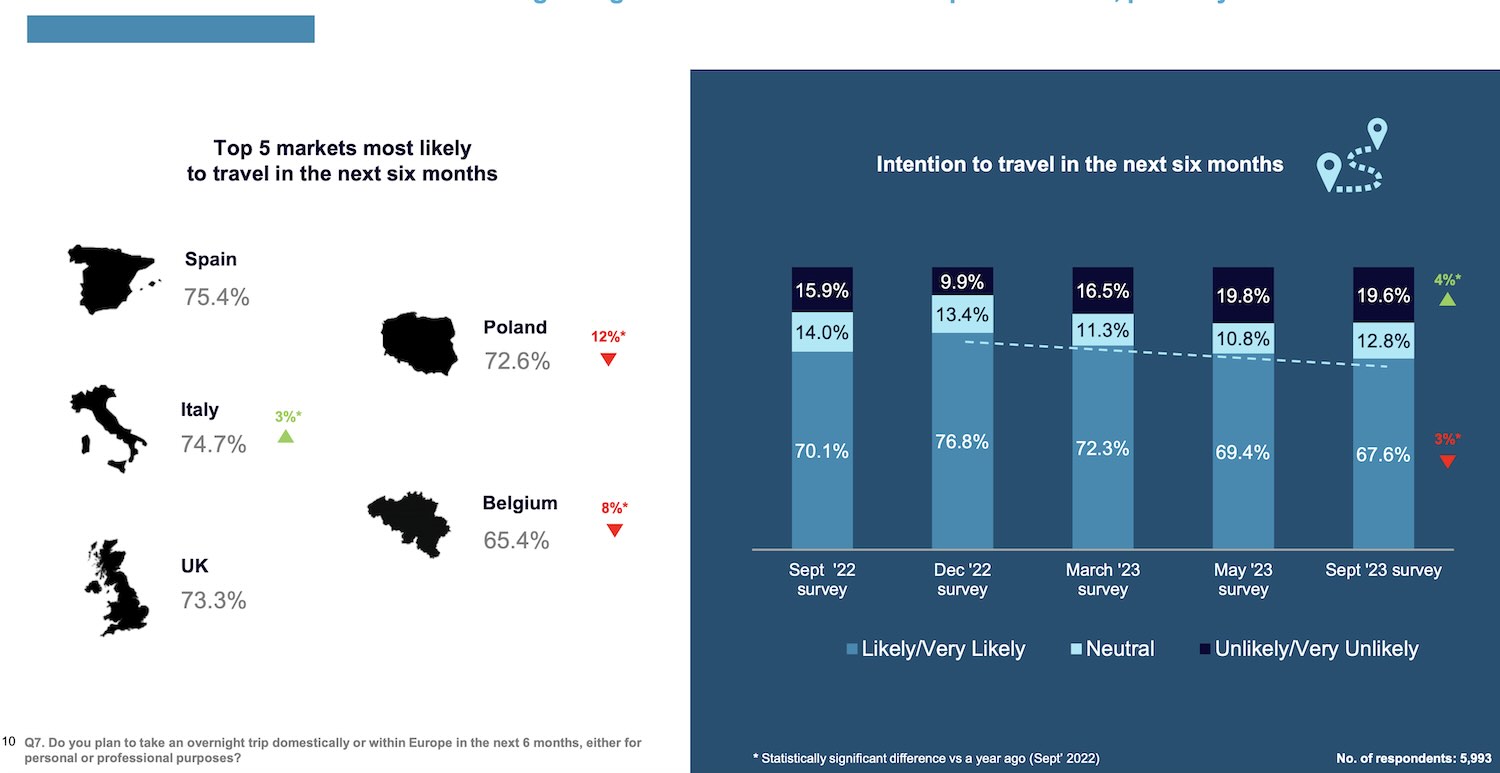
Let’s start with the report’s first significant data point: more than 2 out of 3 Europeans plan to travel in the next 6 months. This number has slightly decreased, approximately -3% compared to what was observed in September 2022 (the third consecutive drop since the beginning of 2023), possibly due to the effect of inflation. Respondents from Spain and Italy are the most eager to plan a trip by March 2024 (75%), followed closely by the British and Polish respondents (both at 73%). 32% of respondents plan to travel during the holiday season (December-January). As for destinations, 32% intend to visit a neighboring country, while 28% prefer a non-bordering European country.
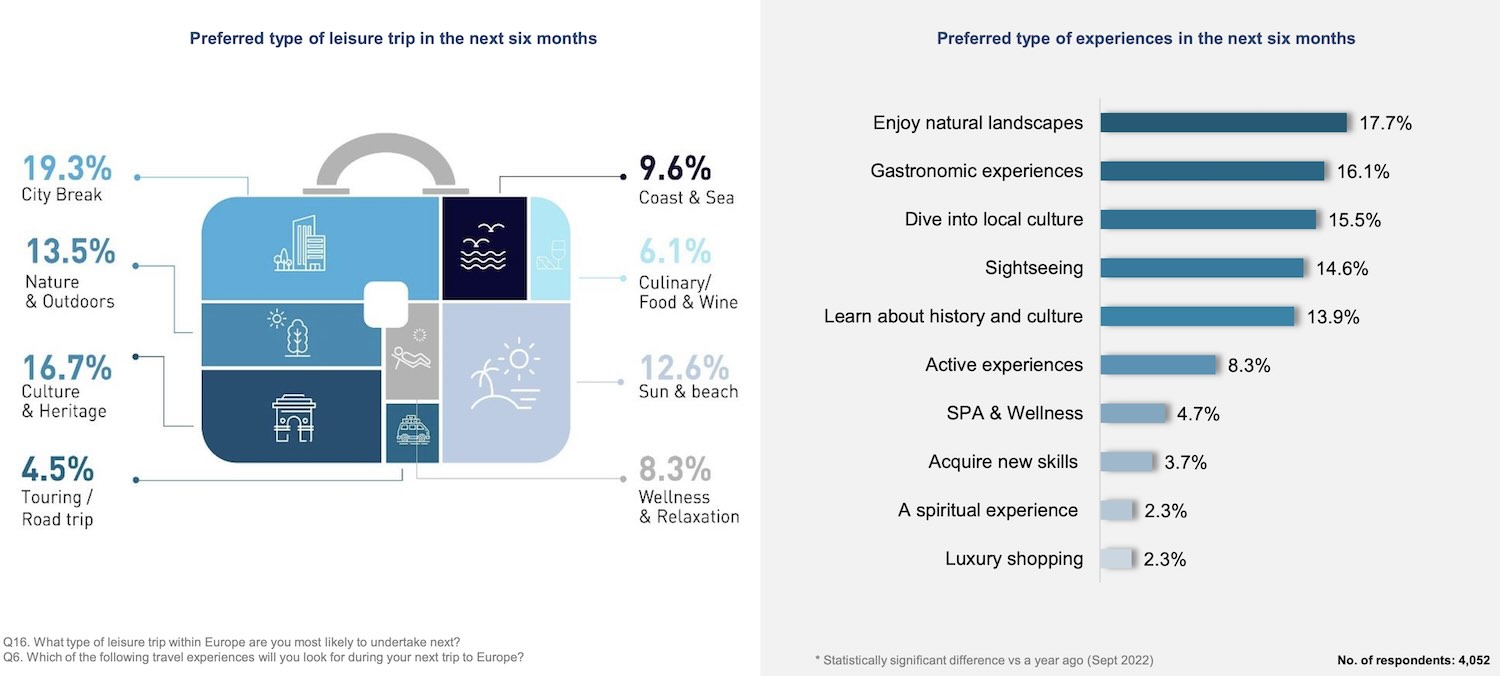
Pleasure trips are still the most planned ones (69%, although a year ago the percentage was 72%), or visits to family and friends (15%), but there is a growing number of travelers planning business trips (8%, which is +3% compared to 2022). Air travel remains the preferred mode of transportation, but at the same time, there is a significant increase in the use of trains or buses, reaching an all-time high (17%, with a 5% increase from a year ago), representing a more eco-friendly alternative to cars (25%, down by 7% from 2022).
Saving strategies to preserve the holiday spirit
What hinders the desire to travel the most? As mentioned earlier, inflation (the top concern for 22% of respondents) and personal finances (16%) weigh heavily on travel intentions. Another concern is related to extreme weather events(14%), showing a 7% increase from the previous summer. Despite these challenges, especially economic ones, Europeans maintain great enthusiasm for travel, leading them to adopt cost-saving strategies both in the planning phase and during their stay.
The choice of off-season travel is gaining popularity (22%), along with the search for more affordable destinations(13%) and planning travel with early bookings for flights and activities (13%). Interestingly, at the time of the survey, only 22% of travelers had fully booked their trips, while 23% had left some options open for transportation or accommodation, likely intending to benefit from last-minute deals.
To save money during their stay, travelers limit their purchases (17%), opt for cheaper accommodations and restaurants (15%), and take advantage of public transportation or bike rentals (12%). Despite these cost-saving tactics, the expected duration of the stay doesn’t seem to change compared to last year, with 29% of Europeans planning trips lasting between 4 and 6 nights.
What changes, however, is the budget that is intended to be dedicated to the holiday: according to the data collected, in fact, the share of travelers who plan to spend up to €1,000 (44%) decreases (-9%) compared to a year ago, while the the share of those with a budget exceeding €1,500 increases by 7% (34%).
Adapting tourism offerings to new needs
Commenting on the results, Miguel Sanz, President of ETC, stated: “We are very pleased to see that European travelers continue to prioritize their travel expenses, even in light of concerns about rising travel costs and personal finances. Current trends offer an optimistic outlook for European tourism in the coming months, demonstrating its resilience to global economic challenges. To fully capitalize on consumer confidence, the industry should carefully monitor and anticipate changes in consumer preferences and adjust its offerings accordingly”.