


For decades, European camping has been one of the most fragmented segments of the hospitality industry. Thousands of independent and family-owned businesses coexist with a relatively small number of large groups. That landscape is changing. Across several of Europe’s major outdoor markets, institutional investors, private equity firms and large hospitality groups are committing substantial amounts of capital to acquisitions, consolidation and the upgrading of campsites.
The individual transactions are different. Some involve investment funds acquiring established operators, others concern large-scale development projects or the acquisition and repositioning of individual campsites. Taken together, however, they point to a broader structural shift: camping is increasingly being treated as an investable hospitality asset class.
One of the clearest examples comes from France and Italy. BNP Paribas Asset Management Alts has continued to expand its Plein Air Property Fund 1, acquiring high-end outdoor hospitality properties in France and Italy. The fund has completed eight acquisitions over a 12-month period, six in France and two in Italy, for almost €150 million, bringing assets under management above €580 million.
The important point is not any individual campsite. It is the existence of a dedicated investment vehicle capable of assembling a portfolio of outdoor hospitality assets across national borders. And BNP Paribas is far from alone.
Italy: private equity meets outdoor hospitality
Italy provides some of the clearest examples of the transition. Human Company has created HU Holding together with Hines and Clessidra, with Hines investing through a joint venture led by funds managed by Apollo Global Management. The operation includes a €120 million preferred-equity investment, while the group’s 2025–2029 industrial plan foresees more than €350 million of investments, financed through the equity operation, bank financing and cash flow generated by the business.

The strategy goes beyond the acquisition of existing campsites. One of its flagship projects is hu Eraclea Village, a major greenfield development in Veneto. This is a significant evolution in the way the sector is being financed: capital is being deployed not only to acquire existing capacity, but also to create new, large-scale outdoor hospitality products.
A different model can be seen at Club del Sole, which has announced €167 million of investments between 2026 and 2028, with the objective of reaching at least 30 villages. The group has already completed seven acquisitions during 2024 and 2025, while its previous investment phase with NB Aurora supported the acquisition of 12 camping villages. Following the entry of TEC – The Equity Club and NB Aurora into the new shareholder structure, Club del Sole has strengthened its financial capacity for further expansion.
The company’s growth model is based on acquisitions followed by consolidation and significant investment in the properties, supported by digitalisation and repositioning. But Club del Sole is also demonstrating a more sophisticated approach to capital management. A recent sale-and-leaseback transaction with Swiss Life Asset Managers involving five villages allowed the group to unlock part of the value embedded in its real-estate portfolio while retaining operational control of the assets.

This is an important development because institutionalisation is not only about bringing new equity into camping businesses. It can also involve separating real-estate ownership from operations and using the value of property assets to generate capital for further growth, acquisitions and investment.
Other major Italian operators, including Baia Holiday, are also expanding their portfolios through acquisitions and new developments. Baia Holiday currently has 15 properties under ownership in Italy and Croatia and reports around €20 million invested in structures and services.
The transformation is therefore not limited to companies backed by financial investors. It also involves established entrepreneurial groups using their own capital to consolidate and upgrade their businesses.
First Camp and the rise of the European platform
Perhaps the most revealing example of the consolidation trend comes from Northern Europe. First Camp has progressively built one of Europe’s largest camping platforms through acquisitions across Sweden, Denmark, Norway, Finland, Germany and Switzerland. Its expansion through its strategic partnership with Lodgyslife is particularly significant.
In November 2025, First Camp acquired the camping activities of Lodgyslife, adding nine destinations in Germany and Switzerland and taking its network to 87 destinations across Europe. The process did not stop there.
In January 2026, the partnership led to the acquisition of Camping Birkensee near Hannover and Harz Camp Goslar, bringing the network to 90 destinations. In July, Insel Camping Borkum was added, taking First Camp to 92 destinations.

The significance lies in the pattern rather than in the individual deals. This is buy-and-build applied to camping: establish a platform, acquire fragmented assets, integrate them and continue expanding. The partnership with lodgyslife is particularly interesting because the German company has explicitly positioned the relationship as a basis for further acquisitions in the DACH region. Camping, in other words, is becoming increasingly scalable.
Spain: HolaCamp shows how a platform can be built from the ground up
Spain provides perhaps the clearest example of another model of consolidation: the creation of a technology-enabled operating platform in a highly fragmented market. In March 2025, HolaCamp secured a €10 million capital investment from Amavi Capital, with the Belgian investment firm taking a minority stake. The funding was intended to support the company’s expansion and technology development.
At the time of the investment, HolaCamp was operating 11 campsites in Spain and Portugal and planned to add at least five more. The subsequent growth is significant. According to Amavi, HolaCamp now operates 13 campsites across Spain and Portugal, with a central team of 50 people based in Barcelona, and generated €30 million in turnover in 2025.
Amavi describes the company as a “Real Estate Operating Platform” and explicitly identifies the fragmentation of the Iberian camping market as one of the reasons for its investment. The model is also different from a traditional campsite chain.
HolaCamp combines campsite operations with a central technology layer covering areas such as dynamic pricing, booking, data management, guest applications, loyalty programmes and automated workflows. In June 2025, the company also secured €21 million of financing from Banco Santander’s Smart Fund, providing additional resources for its expansion.

HolaCamp therefore represents another path towards institutionalisation, one that combines access to capital with technology and increasingly centralised operations, creating the foundations for further acquisitions and growth. The result is a scalable platform capable of managing a larger portfolio of campsites while maintaining a consistent operating model. This approach could prove particularly relevant in Spain, where thousands of campsites are still independently owned and managed.
The investment case is not simply about buying properties. It is about creating a platform capable of making fragmented assets more efficient, more professional and potentially more valuable.
Croatia: investment is transforming the product
In Croatia, the investment story takes a somewhat different form. Here, major hospitality groups are using substantial capital to transform campsites into premium resorts. Aminess invested around €55 million in the development of Aminess Avalona Camping Resort on the island of Pag. The five-star resort includes around 300 pitches, 30 glamping villas and 232 mobile homes. Particularly striking is the premium positioning: 180 units have their own private pool.

Aminess subsequently invested a further €30 million in the transformation of Camping Atea in Njivice, on the island of Krk. The project introduced 205 new mobile homes, 50 glamping lodges, 260 pitches, an 11-pool water complex, wellness facilities, sports areas and a substantial digitalisation programme.
Another major Croatian player, Arena Hospitality Group, invested €14 million in 2025 alone in the modernisation of Arena Stupice and Arena Indije. The company says that more than €221 million has been invested across its portfolio since 2018, with the camping investments contributing to the repositioning of the portfolio towards higher categories.
The Croatian model therefore illustrates another aspect of the same transformation: capital is being used to increase the value of the asset, not simply its capacity.
Different models, same direction
These examples are not identical, and that is precisely what makes them interesting.
- BNP Paribas Asset Management Alts represents institutional investment in outdoor hospitality portfolios.
- Human Company/Hines/Clessidra/Apollo combines entrepreneurial ownership, private equity and real-estate expertise to develop a new generation of large-scale outdoor assets
- Club del Sole combines acquisitions and consolidation with an increasingly sophisticated use of real-estate capital to support growth.
- First Camp/lodgyslife demonstrates the potential of cross-border buy-and-build.
- HolaCamp/Amavi shows how technology can become part of the consolidation model, creating a central operating platform rather than simply a chain of campsites.
- Aminess and Arena demonstrate how major hospitality companies can deploy substantial capital to reposition existing outdoor assets.
Different routes, but a remarkably similar destination: more professionalisation, more consolidation, more capital intensity.
Why are investors interested now?
Why is camping attracting this level of capital? Several factors appear to be converging. First, demand has proved remarkably resilient. Camping and other forms of outdoor accommodation have continued to gain relevance within European tourism. Second, the sector remains highly fragmented, leaving room for consolidation and operational efficiencies.
Third, many existing campsites have significant potential for upgrading. Replacing ageing accommodation, improving F&B, adding wellness and leisure facilities, introducing digital booking and revenue-management systems, and developing premium accommodation can substantially change the economics of an individual site.
Fourth, camping has a physical infrastructure that can be monetised over a relatively long season, particularly as European operators increasingly look beyond the traditional July-August peak. And finally, the sector combines real-estate characteristics with hospitality revenues, a combination that can be attractive to investors looking for alternative assets.
The real target is revenue, not just occupancy
This is perhaps the most important point for campsite operators. Institutional capital is unlikely to be attracted simply by the prospect of filling more pitches. The investment cases emerging across Europe are increasingly based on the ability to increase revenue per guest and the value of each asset.
That means mobile homes and glamping units, premium pitches, private pools, wellness, F&B, activities, digitalisation and dynamic pricing. It also means extending the season.
Spain provides a useful example. New data from the Federación Española de Campings indicate expected average occupancy of around 50% in September 2026, while overnight stays in Spanish campsites in September increased by 9% in 2023, 6.4% in 2024 and 4.9% in 2025. The opportunity is not necessarily to make August even bigger: it is to make more weeks of the year economically productive.
A new phase for European camping
The examples from France, Italy, Spain, Croatia and the DACH region are not isolated cases. They show different ways in which capital can enter the sector and create value: through acquisitions, greenfield development, technology, premiumisation or the aggregation of fragmented assets. But they point in the same direction.
That does not mean that the traditional independent campsite is disappearing. Nor does it mean that every campsite can or should follow the same investment model. But the competitive environment is changing. As larger platforms gain access to institutional capital, they can invest more heavily in product, technology, marketing and distribution. They can also spread management and commercial capabilities across a larger portfolio.
For independent operators, this creates both a challenge and an opportunity. The challenge is obvious: competing against a professionally managed five-star camping resort backed by hundreds of millions of euros requires a different level of investment. The opportunity is that the growing recognition of camping as a serious hospitality product can raise the profile and perceived value of the entire sector.
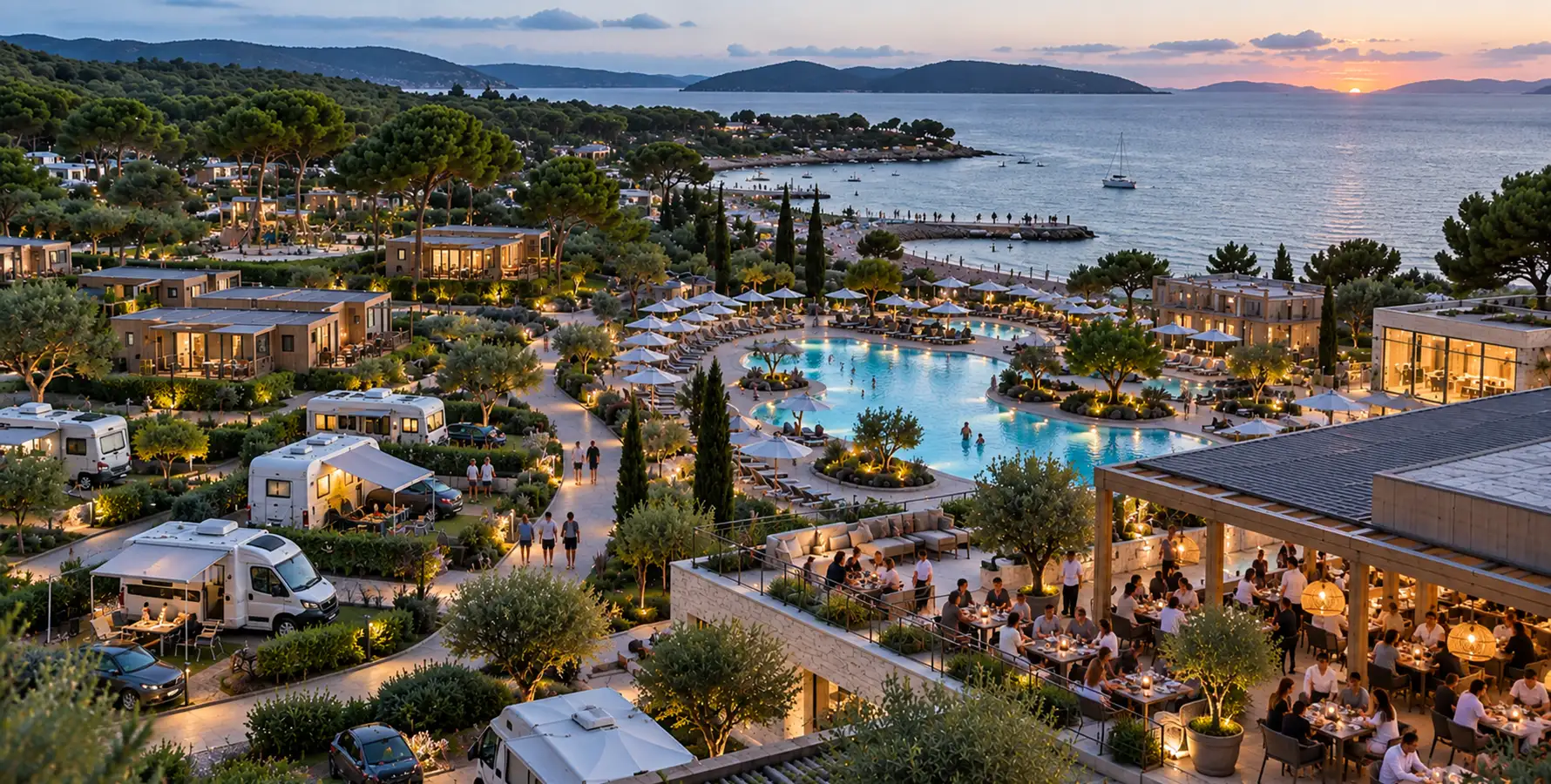
Opening photo generated with AI

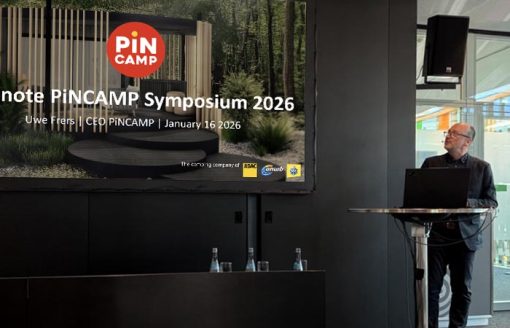
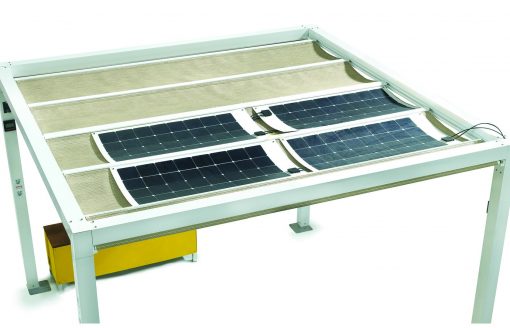
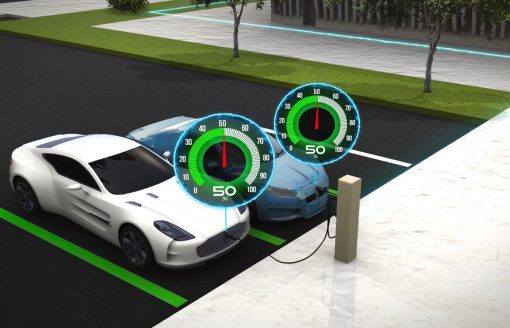
PiNCAMP Symposium 2026: innovation, sustainability and strategies for the future of European camping